
Overview

The Gulf Coast Confederacy (frequently abbreviated as the GCC) is a true confederation, formed by its member states for the mutual goal of security, both physical and agricultural. It is a very old group, dating back to mere months after the Great War with a long history of expansion, collapse, and resurgence in what many call the Confederate Cycle. Understandable for a nation comprised of post-war city states which has never cared overly much about who exactly joins their ranks, so long as they bring their resources to the table.
At present, the Confederacy is at a low point in terms of member states, but in it second mos powerful position due to taking over the Beaumont area, which has earned them a large manufacturing hub and allowed them to make dozens of outposts, camps, and resource extraction facilities across the Badlands.
Its capital and founding settlement is the Complex, a large facility built in the remains of the airport in Orange, TX. Orange has fallen twice in the Confederacy’s history, with its leaders retreating off shore to their Deep Sea Platform to continue ruling the Confederacy until the crisis was adverted.
The largest and/or wealthiest current members of the Gulf Coast Confederacy are:
- Port Lavacow: Formerly Port Lavaca, but remanded shortly after the war by someone who thought themselves to be cooler than they were, Port Lavacow is a small coastal town known for its fishing and shipping industries. The town is run by Mayor Garcia, who is known for his tough but fair leadership style. Mayor Garcia is a former fisherman who rose to prominence in the post-war era by organizing the town's fishing industry and developing new trade routes with other coastal communities. He is known for his tough but fair leadership style and is respected by many in the region for his practical approach to problem-solving.
- Beaumont: A larger industrial town that was once a major center of the oil industry. The town is now run by Mayor Smith, who has focused on developing new industries to replace the declining oil economy. Mayor Smith is a former engineer who worked in the oil industry before the war. Since the war, he has used his expertise to help rebuild the town's infrastructure and develop new industries to replace the declining oil economy. He is a shrewd and pragmatic leader who is well-respected by the town's business community.
- Galve Town: Built atop the remains of the historic coastal city Galveston, the city is now run by Mayor Hernandez, a vault dweller with training in architecture who oversaw the massive rebuilding effort that has restored much of the city's pre-war infrastructure. She is a visionary leader who is known for her ability to inspire her constituents and bring people together in times of crisis.
- Port Arthur: A collection of smaller towns and settlements located along the Brazos River. The region is known for its agriculture and petrochemical industries. The council of mayors (led by Mayor Johnson of Freeport) that governs Brazosport includes a diverse group of leaders, each representing a different town or settlement within the region. Mayor Johnson of Freeport, the largest town in the region, is a former soldier who served in the US Army before the war. He is a tough but fair leader who has worked to build a strong sense of community among the various towns and settlements that make up Brazosport.
- Orange: A small town located on the Sabine River, which forms the border between Texas and Louisiana. The town is known for its lumber and shipbuilding industries. It is run by Mayor Jones, who has worked to build stronger ties with neighboring communities in Louisiana. Mayor Jones is a charismatic and folksy leader who is known for his ability to connect with people from all walks of life.
The Confederacy’s culture is in constant flux, ever shifting as members come and go. It holds its members to no cultural norms, allowing them full freedom in all aspects of life save for requiring taxes, compulsory military service, and assistance with mutual projects such as road clearing / construction and infrastructure development. It is in essence a set of defencive and cooperation pacts.
These pacts are upheld by the Confederate Army, a group based out of Orange which inherited their ancestors Civil War reenactment hand-me-downs, which they use as their uniforms of choice. These relics (and the many replicas created to replace the decaying garments) are supplemented primarily with self-loading crossbows, handguns, and ballistic shields. This isn’t due to a distrust of firearms, nor a lack of capital for weapons, but rather is a cultural staple as the crossbow can be fully utilized underwater and a single bolt often does more damage to its target than a single bullet.
The tradeoff for such a heavy and large projectile is a massive loss of range, magazine size, and rate of fire. These are all trades the GCC is willing to make due to rarely moving far from the coast, and never far from a body of water. Amphibious operations are key to most of their strategies, and crossbows can be utilized while wet, or even entirely immersed in water.
The GCC’s relationship with the sea is deep and intimate. They inherited a large experimental facility dedicated to developing aquatic mining and habitation methods and technologies. This facility is said to be their true capital, though no outsiders have ever seen it and it may simply be their military base. In any case, it does exist, as does the Confederacy’s large fleet of boats and other aquatic and amphibious crafts.
The core of the GCC, those who live in Orange, have adopted more than the trimmings and fashions of their ancestor’s hobby. Over the centuries the idea of recreating battles for a hobby has become a silly notion, so much so the Confederacy’s members have come to believe these reenactments were a pseudo religious act of ancestor worship. One they continue.
This has resulted in the Confederacy adopting much of the ways, practices, and behaviors of the short lived Confederate States of America. Whenever the Confederacy is able to find new information relating to the CSA they integrate and implement them into their way of life. While this practice is primarily simply “the way Orange is” their beliefs have caused other members of the GCC to leave, and others to join.
As one would expect of a group modeling itself after the Confederate States of America, the Gulf Coast Confederacy practices slavery. They differ from their cultural ancestors in that they do not enslave humans, reserving the collar and lash for mutants and sapient robots. Their general belief is the great war made the differences between humankind irrelevant by creating a truly undesirable class.
This belief has been pivotal for the Confederacy, with their power usually waning and waxing as the rest of the wasteland swings back and forth between tolerating and dispising mutantkind. When mutants are feared, the Confederacy’s member states swell in population and number, and vise versa.
This practice is not even fully accepted by the citizens of Orange. There are three general camps, the largest favors the status quo, a minority wish to ban chattel slavery, and an extremist hyper minority who seek to expand their slavery practices to all non-caucasian humans. Fittingly enough, given their culture’s inspiration, the issue of slavery drives the majority of their internal conflicts.
Exturnaly speaking, they are seen as an important trade partner by everyone without strong ties to a mutant or robot community.
History and Culture
To understand the GCC’s culture is to know its history. It is a very simple and human organization, rooted in both the best and worst of humanity. The GCC was founded through the union of Future-Tek Scientists with civilian civil war reenactors. While once a very popular past time, by the year 2077 the American Civil War had ended 211 years ago. Few people were interested in exploring and preserving its history through reenactments, with most people having moved to reenact the Vietnam war as it became the era the reenactment subculture came to romanticize.
Those who continued to work with the Civil War did so primarily due to personal reasons and their own local cultures. They saw the American Civil War as the last time the way of life they yearned for had a chance of being realized. They came from families which had idealized the South for 10 generations, creating myths about the time, place, and people as solid as any mainstream religion.
The Great War wiped the status quo off the map, opening opportunities for all kinds of marginalized viewpoints to establish themselves as dominate powers and genuine ways of life… If those who held them could gather enough physical power and claim enough territory and people the old fashioned way. By violence.
The GCC’s founders seized their chance, and raised their children not as they were raised, but taking into account the simple fact that their children would have never known the oppression of the Old World and thus, not understood why they had to fight for what their parents believed in. Naturally, as most humans would, this meant they indoctrinated their children into their belief system by insisting “this is what is right”.
The Great War is 210 years gone. Essentially as distant to the GCC as the Civil War was to the GCC’s founders. Another 10 generations have passed. Those founders have been mythologized as thoroughly and firmly as they themselves mythologised the key figures of the AMerican Civil War… And the Civil War itself has been largely forgotten. Reduced to a creation myth from a lost age. The sort of thing children are expected to answer a multiple choice quiz about but need never think about in detail.
Any trait the GCC shows can therefore be answered with “Because that’s what <founding figure> said was the way it’s done!” with nothing but reverence, seriousness, and fanaticism. The GCC is very much jingoistic and worships their ancestors rather than guided by them. In their eyes, each and every founding figure history remembered is a deity of sorts, and to go against their will is unthinkable.
Leader
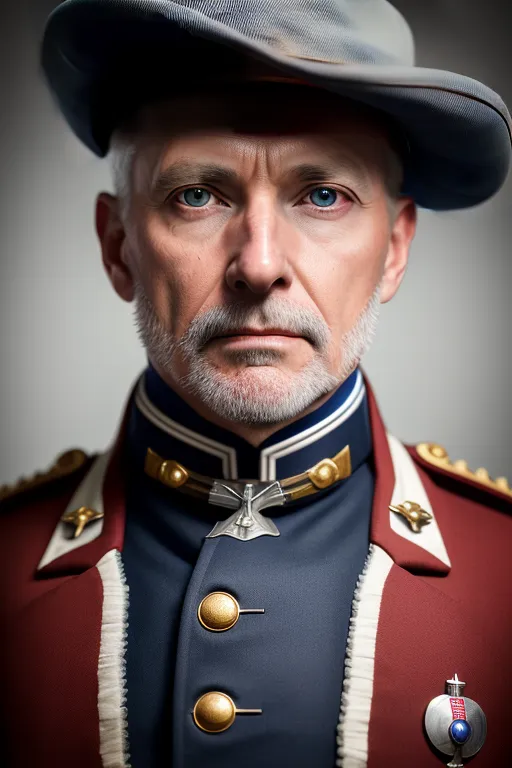
The current President of the Confederacy is the charismatic and shrewd Marcus Johnson. President Johnson rose to power from the GCC’s armed forces, having held the title of general and campaigned for office under his banner of the general who fended off the Ironwood Collective’s “unjust and unwarranted assault on our freedoms” to use his own words.
While the truth of the matter is “complicated” General Johnson did indeed save the city of Orange in a rather high-profile fashion, routing the Collective’s forces in the process. Naturally, when the public becomes incredibly enamored with a new hero just before election season, it’s fairly easy for that hero to grab power by simply running for office. Naturally, that’s exactly what Marcus did.
Unfortunately for the GCC, President Johnson is not as effective a president as he was a general, and his good will is quickly running out. While shrewd and charismatic, President Johnson lacks any connections outside of the GCC Army. He also lacks the knowledge necessary to build those relationships and is too arrogant to believe he has anything to learn. Instead President Johnson attempts to force civilian bureaucrats to work like military officers.
He is unlikely to be reelected.
Despite this, he is a skilled negotiator for business deals is a skilled strategist, with a keen sense of the economic realities facing the region. He has greatly revitalized trade, created new trade routes, and gathered enough interest in joining the GCC with a few communities ot make their inclusion in the COnfederacy almost a certainty. Unfortunately, these are not enough to color him as a desirable leader in the eyes of the GCC’s core demographic.
Headquarters
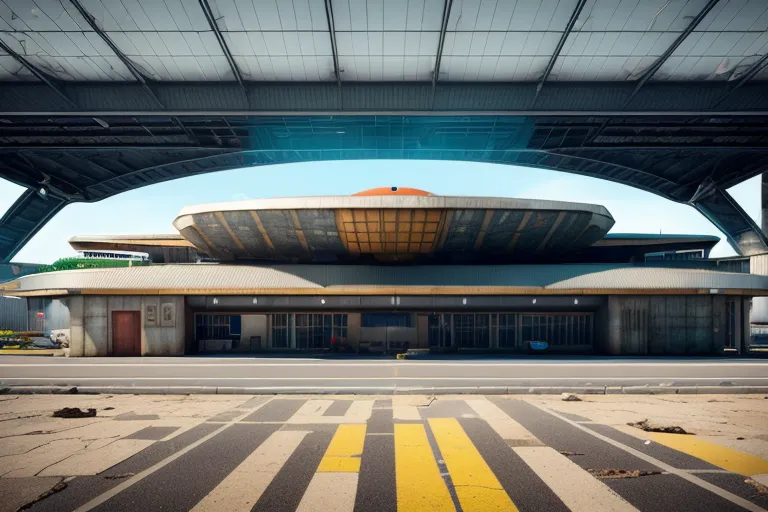
The official headquarters of the GCC is an old airport terminal creatively called “The Terminal”. When the satellite communities within he Confederacy wish to meet with the core of the GCC, they travel to Orange and enter the Terminal to sit at the long table within the Gold Lounge and air their grievances, state their requests, or place motions before the assembly.
The Terminal is also where the GCC’s congress meets and performs their daily work. It contains the headquarters for the GCC military, and in all ways appears to be a proper primary hub for a national government. Except, the President and other top ranking officials of the GCC do not work there.
They visit as needed. They make their speeches from its balconies to assembled masses within its grand hall. No more, no less.
Equally strange, the GCC military HQs seem to take as many orders as they give. People paying careful attention will note they seem to work as a buffer. Commands get issued from them, but anything with any real magnitude is passed somewhere else.
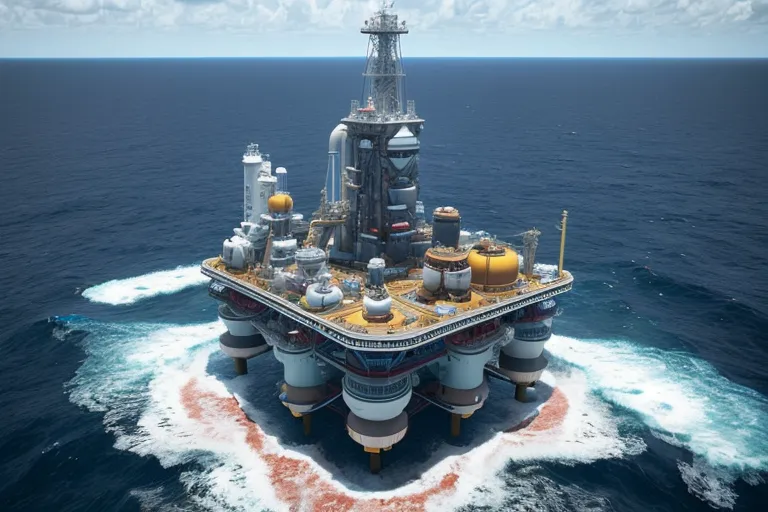
It is widely believed (but unproven) that the core fo the GCC is in actually governed from an off shore platform known as the “Deep-Sea Mining Rig”. There are frequent boat trips between the Rig and the Terminal. Certainly the Rig is important to the GCC, as it is the source of the majority of their materials, both for their own use and trading with other groups. Their military therefore has a massive presence around the Rig. Its also important to their history, as the GCC’s founders sheltered there during the first few months of the post-war world.
But again, nothing has been proven. Though people have tried.
Unique Assets
Most of the Confederacy’s unique technologies come from a Vault-Tec facility off the coast of Orange which was experimenting with underwater habitation and construction methods. Their ancestors used these technologies to survive the early days of the wasteland, and taught their decendents how to upkeep maintain and update them as time went on.
Gulfweed Reactor
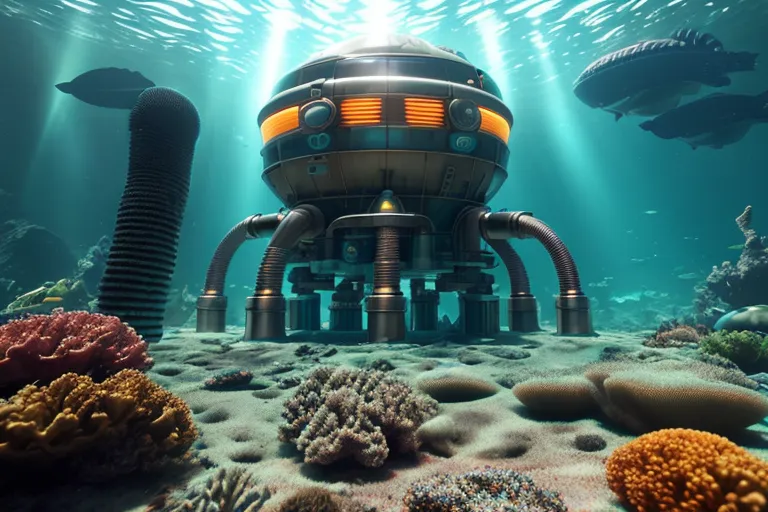
The Gulfweed Reactor is a large, industrial-sized reactor that uses seaweed as a fuel source to generate power. Seaweed is first harvested from the Gulf of Mexico and then processed into a biofuel that is fed into the reactor. The reactor is designed to be modular, allowing for easy expansion as energy demands increase. The seaweed fuel is burned to produce steam, which in turn drives turbines to generate electricity. The Gulfweed Reactor is a sustainable and renewable source of energy for the Gulf Coast Confederacy.
The Gulfweed Reactor was developed by a team of scientists and engineers in the Gulf Coast Confederacy in response to the region's growing energy needs. Traditional sources of energy, such as oil and gas, were becoming increasingly scarce and expensive, and the Confederacy needed a new solution. Seaweed was identified as a promising alternative fuel source due to its abundance in the Gulf of Mexico and its ability to grow quickly and sustainably. The Gulfweed Reactor was first tested in a small-scale pilot project and proved successful, leading to the construction of larger reactors throughout the Confederacy. Today, the Gulfweed Reactor is a key component of the Confederacy's energy infrastructure, powering homes, businesses, and industry across the region.
Amphibious Assault Vehicles
The Gulf Coast Confederacy has made use of pre-war and post-war inventions and engineering practices to create a small fleet of vehicles designed for use on land and at sea. These vehicles play a large roll within their civilization and are part of why the Confederacy prefers not to move inland whenever possible. The fleet includes at least one of the following vehicles.
- Sea Serpent: The Sea Serpent is a heavily-armored, all-terrain amphibious assault vehicle that resembles a cross between a tank and a hovercraft. It is designed to navigate through swampy and marshy terrain, and can also operate in shallow water. The vehicle is equipped with heavy armor plating and is armed with a variety of weapons, including a turret-mounted machine gun and a rocket launcher. The Sea Serpent is used primarily for assaulting enemy positions in difficult-to-reach areas.
- Mudskipper: The Mudskipper is a smaller, faster amphibious vehicle that is primarily used for reconnaissance and light assault missions. It is equipped with a high-powered engine and a hydrojet propulsion system, allowing it to move quickly through both water and land. The vehicle is lightly armored and armed with a single machine gun, but its speed and agility make it difficult to hit. The Mudskipper is often used to scout enemy positions and gather intelligence on enemy movements.
- Leviathan: The Leviathan is a massive amphibious assault vehicle that can transport large numbers of troops and equipment across water and land. It resembles a cross between a hovercraft and a cargo ship, and is equipped with heavy armor plating, powerful engines, and a variety of weapons. The Leviathan is used primarily for large-scale amphibious assaults, and can quickly deploy troops and equipment onto enemy beaches or riverbanks.
- Hammerhead: The Hammerhead is a heavily-armed, shark-like amphibious vehicle that is designed for close-range combat. It is heavily armored and armed with a variety of weapons, including a turret-mounted heavy machine gun and a flamethrower. The Hammerhead is used primarily for assaulting fortified enemy positions and for providing fire support to other assault vehicles. Its distinctive design and fearsome reputation have made it a favorite among Gulf Coast Confederacy troops.
The Hurricane Barrier
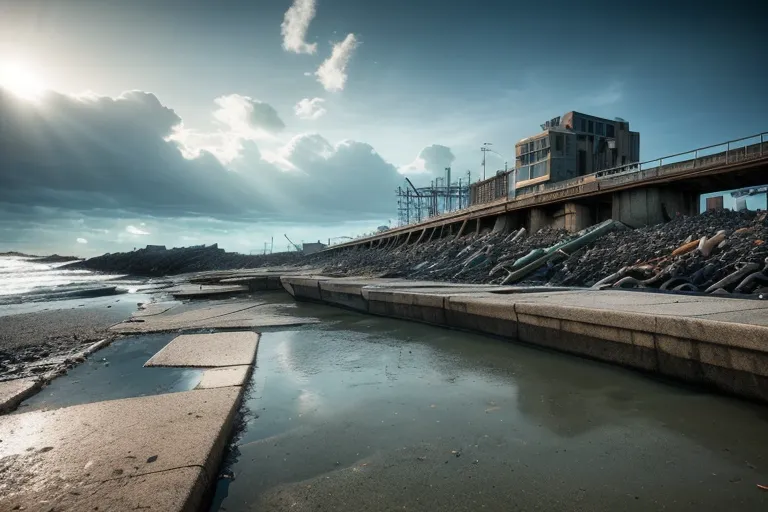
The Hurricane Barrier is a massive wall built by the Gulf Coast Confederacy along the coastline of the Gulf of Mexico. Its purpose is to protect the Confederacy's settlements and infrastructure from the devastating effects of hurricanes, which are common in the region.
The barrier is made of reinforced concrete and steel, standing over 30 meters tall and stretching for hundreds of kilometers along the coast. It is designed to withstand the strongest hurricanes and storm surges, with a system of gates and pumps that can be operated to regulate water flow. Some of the less important stretches of coastline use “junk fill” rather than pure concrete walls, but still serve to mitigate or even block flood waters from extreme tidal events.
The Hurricane Barrier was originally conceived in the aftermath of a particularly destructive hurricane that hit the Gulf Coast shortly after the Great War. The Confederacy's leaders recognized the need for a long-term solution to protect their people and invested heavily in the construction of the barrier. It took several decades to complete and was a massive undertaking, requiring the mobilization of thousands of workers and resources from across the Confederacy.
The barrier has been incredibly successful in protecting the Confederacy's coastlines from hurricanes, with only minimal damage sustained during even the strongest storms. It has also become a symbol of the Confederacy's strength and resilience in the face of adversity.
The Deep-Sea Mining Rig
The Deep-Sea Mining Rig is a large, specialized drilling platform designed to extract valuable resources from the ocean floor. The Gulf Coast Confederacy has invested heavily in the development of this technology, as it provides a significant source of income and resources for their society.
The Deep-Sea Mining Rig is a massive structure, typically several hundred feet in length and capable of drilling down into the ocean floor to extract minerals, oil, and gas. The rig is equipped with advanced sensors and mapping technology to identify and locate the most valuable resources.
The rig is typically manned by a crew of highly trained workers, including engineers, geologists, and support staff. These workers are responsible for monitoring the drilling process and ensuring that the rig remains stable and secure.
The Deep-Sea Mining Rig is a complex and expensive piece of equipment, but it is an essential component of the Gulf Coast Confederacy's economy. The Confederacy relies on the resources extracted from the ocean floor to power their cities and fuel their industry, making the Deep-Sea Mining Rig a vital part of their society.
It might also be their true center of governance.
Seabed Crawler
The Seabed Crawler is a type of deep-sea mining vehicle used by the Gulf Coast Confederacy to extract resources from the ocean floor. It is a large, heavy-duty vehicle that is designed to operate in the harsh conditions of the deep sea.
The Seabed Crawler is equipped with a variety of cutting and drilling tools that allow it to extract ore and minerals from the seabed. It is also equipped with powerful lights and cameras that allow the operator to see what is happening in the surrounding environment.
The vehicle is designed to move along the seafloor on tank-like treads that allow it to navigate over rough terrain. It is powered by a combination of batteries and diesel engines, which provide enough power to keep it running for extended periods of time.
The Seabed Crawler is operated by a crew of highly trained engineers and technicians who monitor its progress and ensure that it is functioning properly. It is one of the most important pieces of equipment used by the Gulf Coast Confederacy in its deep-sea mining operations, and it has helped to make the Confederacy one of the wealthiest and most powerful factions in the wasteland.
Underwater Habitats
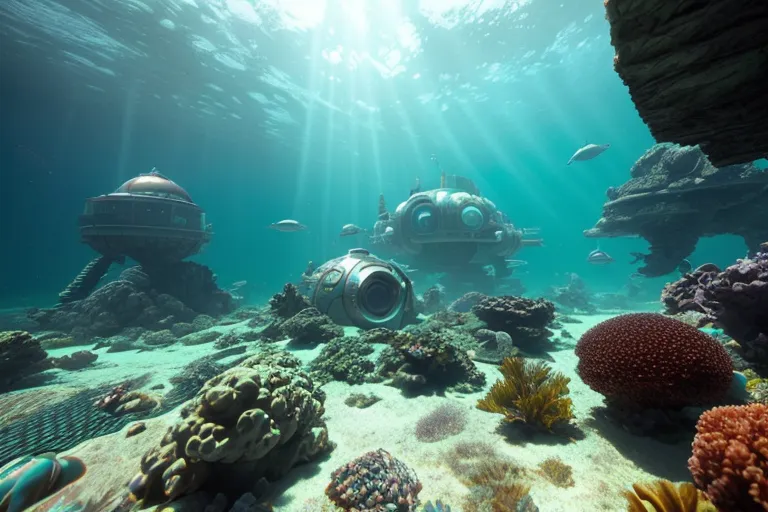
The Underwater Habitat is a specialized structure designed to allow humans to live and work underwater for extended periods of time. It is a crucial technology for the Gulf Coast Confederacy, which relies heavily on underwater resources.
The Underwater Habitat is a modular structure, meaning that it can be expanded or contracted depending on the needs of the inhabitants. It is made of a strong, corrosion-resistant metal alloy that can withstand the high pressures of the deep sea. The interior is divided into various compartments, including living quarters, workspaces, storage areas, and life support systems.
Life support systems are a critical component of the Underwater Habitat, providing a breathable atmosphere and regulating temperature, humidity, and air pressure. The Habitat is equipped with high-tech sensors and monitoring systems that constantly monitor the environment, alerting the inhabitants to any potential hazards or malfunctions.
The Underwater Habitat is designed to be self-sufficient, with its own power supply and water filtration systems. Waste is carefully managed and recycled, and food is grown using hydroponic systems. The Habitat is also equipped with advanced communication systems, allowing inhabitants to stay in touch with the outside world.
The Gulf Coast Confederacy uses Underwater Habitats for a variety of purposes, including scientific research, resource extraction, and military operations. They are often deployed in remote locations, far from any shore-based infrastructure. The Habitats are also used as a base for submersibles and other underwater vehicles, allowing for more efficient exploration and exploitation of underwater resources.